Bruggen slaan tussen de virtuele en fysieke wereld voor verpakkingsprototyping
UX
Research
Longread
Binnen verpakkingsontwerp zijn ontwerpers gewend om continu te schakelen tussen schetsen, CAD-modellen en fysieke prototypes. Elk medium heeft daarbij zijn eigen beperkingen. Digitale tools bieden flexibiliteit en snelle iteratie, maar missen zintuiglijke eigenschappen. Fysieke prototypes geven juist meer gevoel en definitie, maar kosten tijd en moeite om te produceren.
Ons team kreeg vanuit de University of Twente de kans om te onderzoeken hoe VR die balans zou kunnen veranderen. Onze opdrachtgever FrieslandCampina liep in het huidige ontwerpproces tegen meerdere beperkingen aan:
Ontwerp en evaluatie vinden plaats in aparte fases, wat iteraties vertraagt.
Er is weinig ruimte voor co-creatie met consumenten of interne stakeholders.
Er bestaat een duidelijke afweging tussen fysieke prototypes (rijk aan zintuiglijke details maar traag) en digitale prototypes (snel maar zonder tastbaarheid).
Belangrijke ervaringskwaliteiten zoals gewicht, grip, vorm, openingsgedrag en textuur zijn lastig te beoordelen met alleen digitale tools.
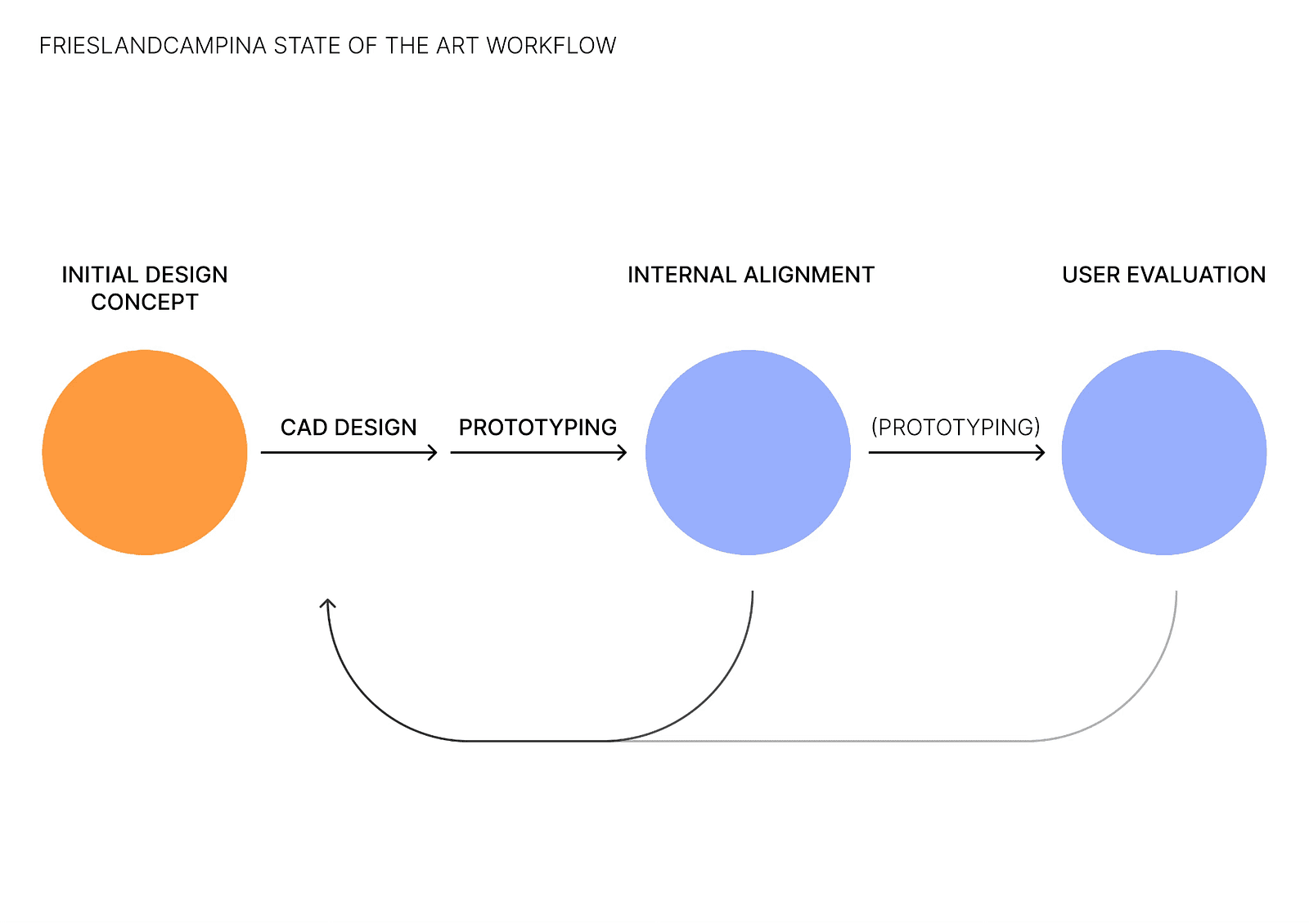
Centrale onderzoeksvraag
De centrale ontwerpvraag werd:
Hoe kunnen we de snelheid van digitaal prototypen combineren met de zintuiglijke ervaring van fysieke modellen om collaboratieve, realtime ontwerpdiscussies mogelijk te maken?
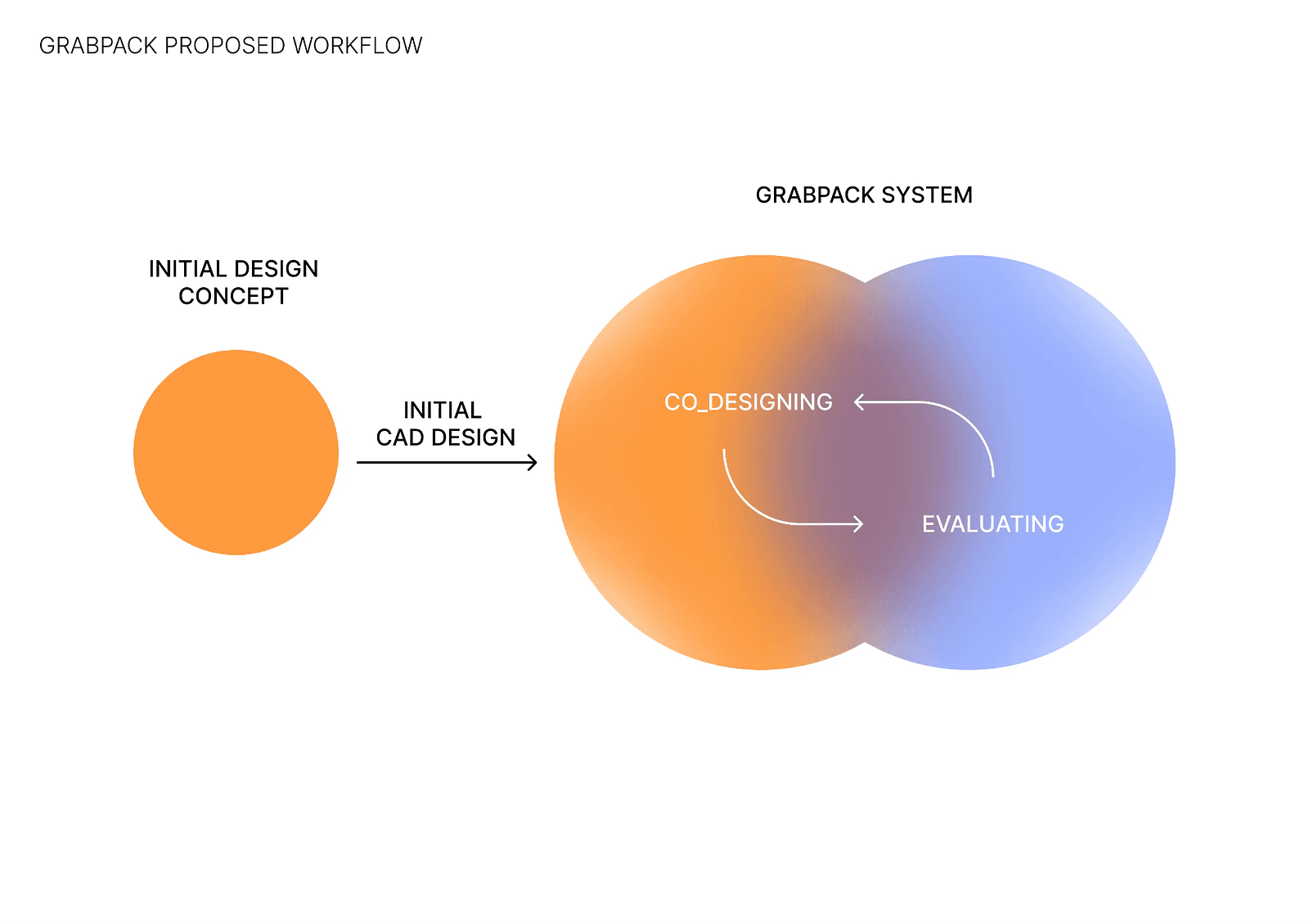
Wat VR kan toevoegen aan het ontwerpproces
Onze verkenning begon bij de vraag wat VR kan toevoegen ten opzichte van traditionele ontwerptechnieken. Met VR kun je ieder CAD-model direct in volledige driedimensionaliteit voor je zien. Je kunt rondom een ontwerp lopen, ermee interacteren en het evalueren in iedere denkbare omgeving. Dat alles kan de tijd tussen concept en prototype aanzienlijk verkorten.
Toch ontbreekt er binnen VR één cruciaal onderdeel van verpakkingsontwerp: gevoel.
Je kijkt niet alleen naar een verpakking, je houdt hem vast. Vorm, formaat, gewicht en wanddikte spelen allemaal een rol in hoe een verpakking ervaren wordt. Juist dat aspect ontbreekt in een volledig digitaal ontwerpproces. Om de verschillende stappen in het ontwerpproces dichter bij elkaar te brengen, onderzochten we hoe deze fysieke dimensie toegevoegd kon worden aan digitale workflows.
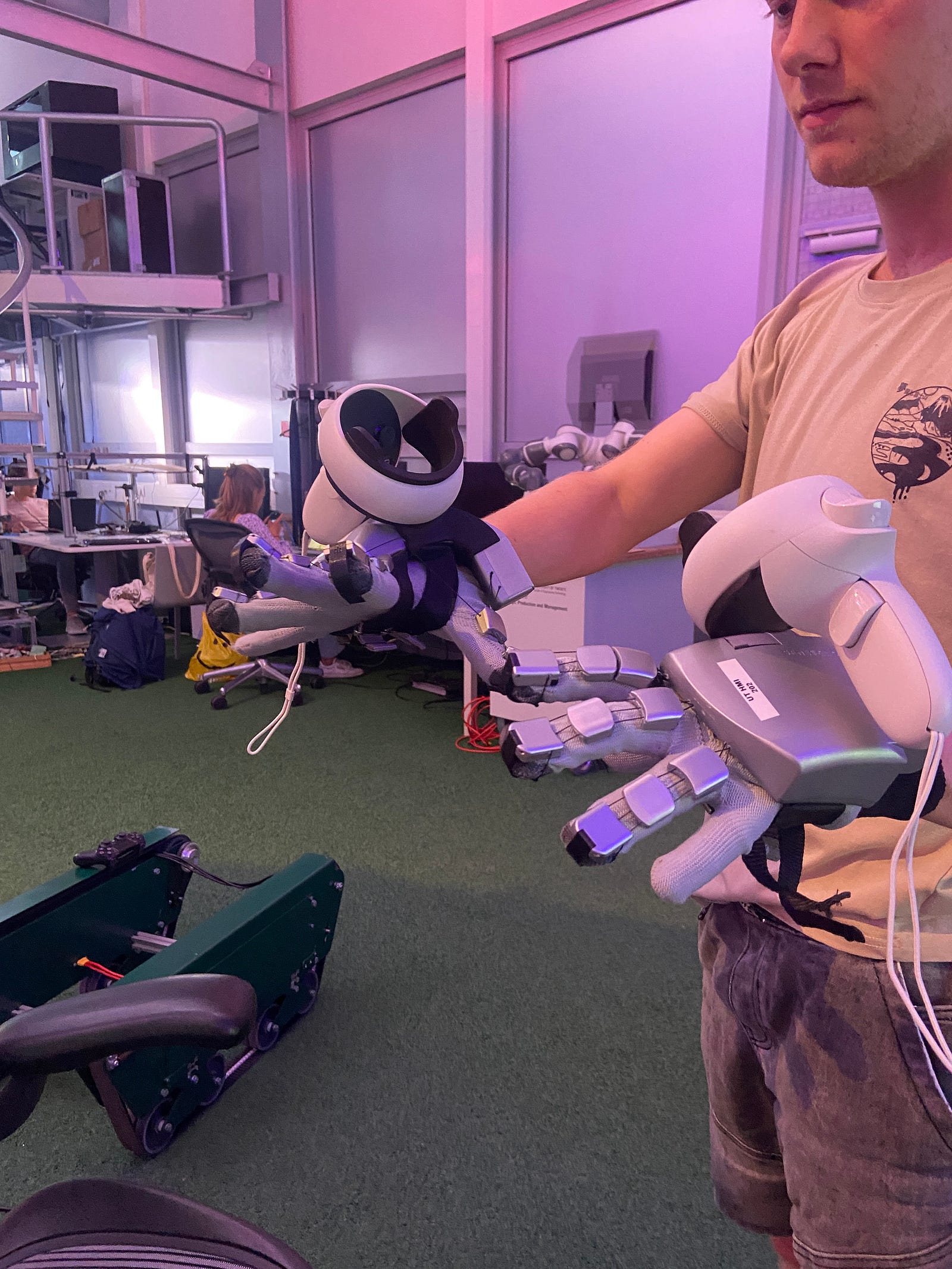
Teamgenoot Tijs droeg hierbij de SenseGlove in combinatie met Meta Quest controllers in het VR-lab.
Experimenteren met haptics
Binnen dit project onderzochten we hoe een haptische handschoen, de SenseGlove, gebruikt kon worden om meer gevoel toe te voegen aan digital-first design workflows.
Door VR te combineren met de SenseGlove ontwikkelden we een proof of concept waarmee gebruikers een virtuele verpakking konden oppakken en realtime parameters konden aanpassen.
Met dit concept konden gebruikers potentieel direct een ontwerp voor zich zien, ermee interacteren, het plaatsen in verschillende virtuele omgevingen zoals een keuken, winkelschap of baromgeving en ondertussen formaat en proporties aanpassen zonder te hoeven wachten op een nieuw prototype.
Het concept bestond uiteindelijk uit drie verbonden onderdelen:
Een virtuele ontwerpruimte waarin vorm en volume realtime aangepast konden worden.
Contextuele VR-omgevingen om te onderzoeken hoe een verpakking zich gedraagt in alledaagse situaties.
Haptische interactie via de SenseGlove om het virtuele object een gevoel van fysieke aanwezigheid te geven.
De beperkingen van de technologie
De kwaliteit en nauwkeurigheid van de feedback vanuit de SenseGlove was op dat moment nog beperkt. Tijdens evaluaties konden gebruikers nauwelijks onderscheid maken tussen bijvoorbeeld een cilinder en een kubus.
Toch zei een van onze eerste testers iets veelzeggend:
“Het voelt alsof ik iets vasthoud.”
Die kleine reactie was eigenlijk al voldoende. Het virtuele object was, ondanks de imperfecte technologie, veranderd van iets dat je alleen observeert naar iets dat fysiek ervaren wordt.
Van observeren naar ervaren
Die verschuiving van kijken naar voelen kan nieuwe gesprekken openen tussen ontwerpers en eindgebruikers. Gesprekken waarvoor normaal meerdere iteraties van mock-ups nodig zouden zijn.
Het creëert ruimte om sneller te experimenteren, ideeën tastbaar te maken en ontwerpen niet alleen analytisch te beoordelen, maar juist via fysieke interactie te ervaren.
Zelfs in deze vroege en ruwe vorm liet het prototype zien hoe digitale en fysieke eigenschappen kunnen samensmelten tot één ontwerpmoment. Het maakte zichtbaar hoe de grens tussen concept en prototype veel kleiner kan worden, en hoe ontwerpgesprekken misschien juist zouden moeten plaatsvinden rondom iets dat je kunt voelen — zelfs als het alleen in VR bestaat.
In dit artikel kijk ik terug op een universiteitsproject waar ik nog steeds met veel enthousiasme op terugkijk. Voor dit project werkte ik samen met Niels Bos, Robert Breugelmans, Dick Dekker, Marnix Riepen en Tijs Zandt.
Mijn bijdrage binnen dit project lag voornamelijk bij het definiëren van hoe de ervaring moest aanvoelen, wat deze interacties mogelijk moesten maken en het vormgeven van het narratief rondom hoe dit soort nieuwe interactievormen de manier waarop we ontwerpen met computers kunnen veranderen.